

.JPG)
Modern bridges and the Sorcerer's Apprentice syndrome
Modern Bridges and Magnetic Alignment
When Geometry Changes — Everything Else Must Follow
Some players find the outside E strings on vintage-style Stratocasters, Jazzmasters and Jaguars sit very close to the edge of the fretboard. In energetic playing, those strings can occasionally slip off the ends of the frets.
At first glance, narrowing the saddle spread of the bridge — bringing the strings slightly inward — seems like an elegant solution. And in many ways, it is. Modern two-point and narrow-spaced bridges were introduced to address exactly this concern.
However, when one element of a guitar’s geometry changes, others must change with it.
One of those elements is pickup magnet spacing.
The Overlooked Alignment Issue
For balanced string output, each string must pass through the effective magnetic aperture of its corresponding pole. When a string drifts toward the outer edge of that magnetic field, output gradually decreases. The further outside the magnetic perimeter the string moves, the greater the drop-off.
Strat pickup magnet spread was designed around wider bridge spacings typical of the 1950s.
When narrower bridge designs later became common — including models introduced by Fender in the late 1980s — string spacing changed, but pickup rod magnet geometry did not.
In online forums, owners of American Standard models have noted that bending an outer string inward — away from the poles — produces a great loss of output. The geometry explains why.
This is a defect caused by a geometric mismatch.
And geometry always matters.
The First Solution — And Its Consequence
When narrower bridge spacing became widespread, one obvious response was to narrow the magnet spread of the pickup.
Around the year 2000, Kinman introduced narrower-spaced Strat neck pickups to restore correct E-string alignment on modern bridge-equipped instruments.
Alignment improved dramatically.
But another issue emerged
When rod magnets are moved closer together in a traditional Fender pickup, the coil geometry changes. Specifically, the overall length of copper wire in the coil is reduced. Less wire changes the pickup’s inductance and shifts its resonance, which reduces dynamic range. Under strong pick attack, this made the tone sound compressed or fuzzy.
At first glance, it seems simple to fix: just add more turns of wire to restore the original coil length. On paper, more wire should restore the electrical properties — but in practice, the interaction with capacitance and resonance makes the problem more complex.
Adding turns increases parasitic capacitance. Capacitance alters resonance. Resonance affects clarity. Simply restoring coil length does not restore performance — and introduces new compromises.
This is what we refer to as the “Sorcerer’s Apprentice effect”:
Solving one problem without recalibrating the entire system will create new ones.
The Engineering Breakthrough
Between 2000 and 2016, the challenge became clear:
How do you narrow magnet spacing without degrading dynamic performance?
The eventual solution required a re-understanding of coil behaviour, slippery magnetic field control, and materials selection. Because it demanded more than geometry adjustments — it required architectural refinement.
By 2016, Kinman had developed a proprietary solution that allowed:
Narrow 49.5mm and Intermediate 51mm magnet spreads
Satisfactory E-1st string alignment on both modern as well as vintage bridges
Preserved dynamic range
Maintains clarity under strong attack
No unwanted increase in capacitance
The technical details remain proprietary, but the principle is simple:
Alignment must be achieved without compromising the electromagnetic behaviour of the pickup.
Today, Kinman offers Standard (52.5mm), Intermediate (51mm), and Narrow (49.5mm) magnet spreads — each engineered to maintain full performance integrity.
Importantly, these are not “special order compromises.”
They are fully engineered variants, designed to perform at the same level as our standard models and at no additional cost.
Why This Matters
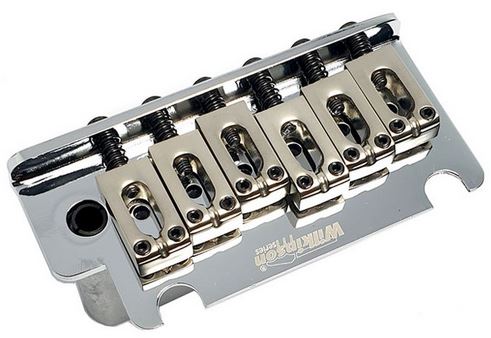
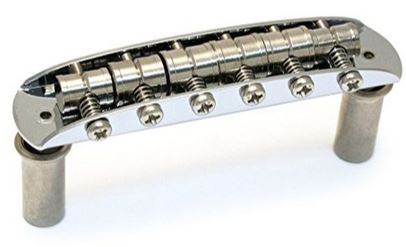
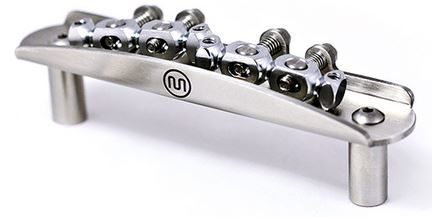
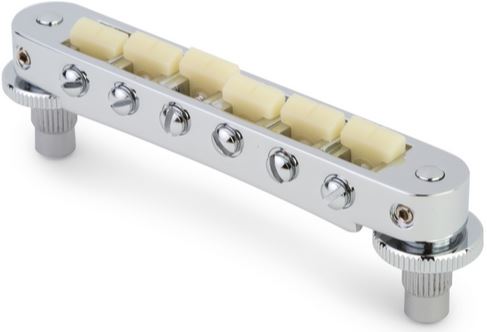
If your instrument uses a modern narrow-spaced bridge — whether from Fender, Mastery Bridge, Floyd Rose, Gotoh-Wilkinson, Tune-O-Matic designs, or others — and your pickups use individual magnetic poles, it is worth examining your string alignment.
Look at the neck and middle pickups.
Do the outer E strings sit centrally over the magnets?
Or have they moved toward the inside edge like in this photo?
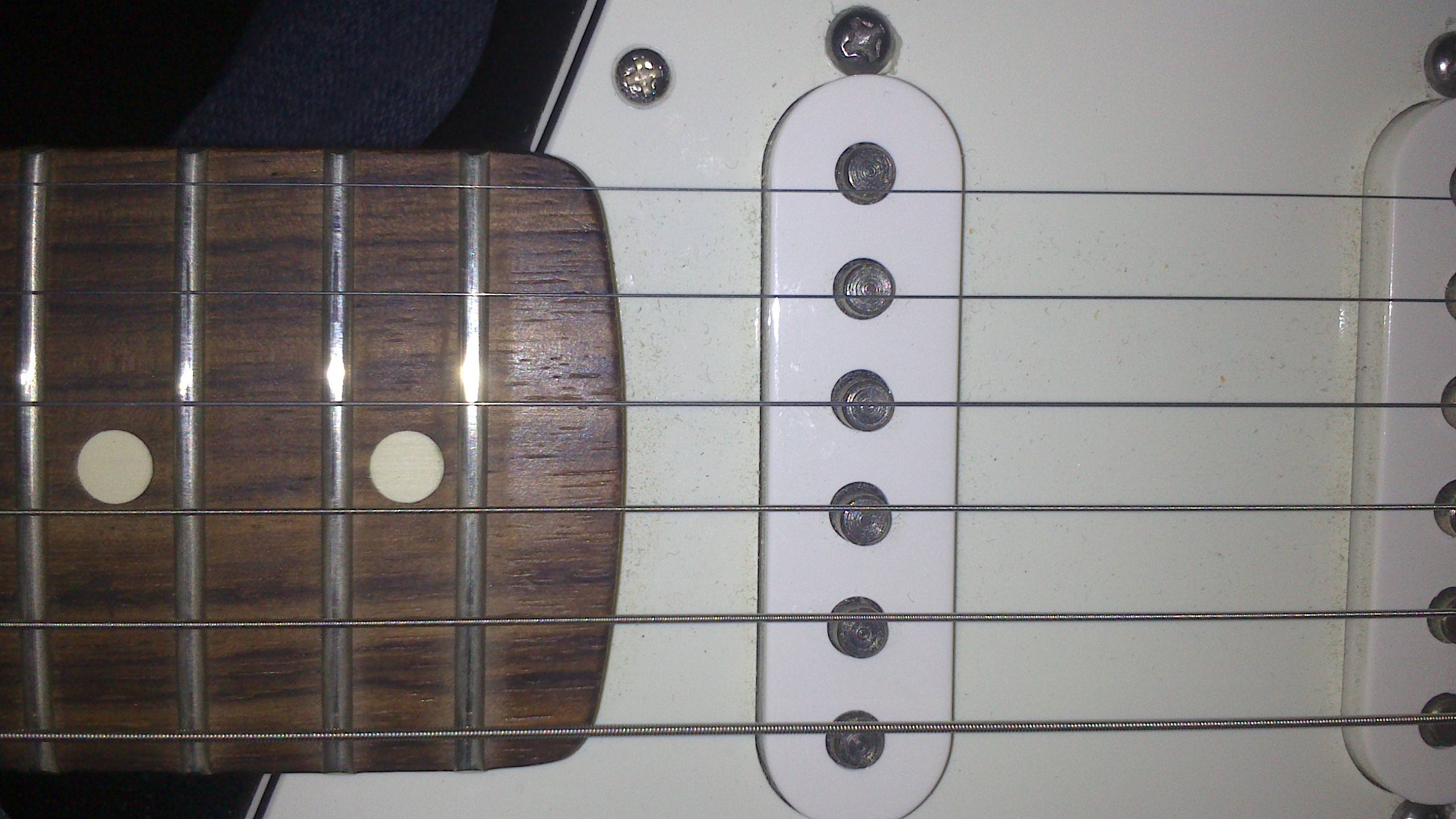
Misalignments affect tone and dynamic performance
Instrument Geometry Is a System
Bridges, fretboard radius, string gauge, pickup magnet spread — they are not isolated specifications. They are an interdependent system.
When one dimension changes, others must also change.
Modern bridge spacing was a logical evolution.
Proper magnet alignment is simply the necessary companion evolution.
The goal is not to return to the past.
The goal is coherence.
And when geometry is coherent, tone follows.
This is true for Fender as well as all other types of pickups including Humbuckers and P-90 which also are available in 3 different pole spreads to suit both Wide and Narrow bridges.
Kinman provides the coherence